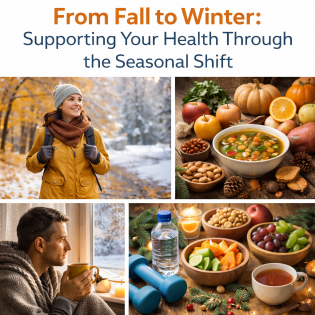
As the seasons shift from fall to winter, changes in temperature, daylight, and daily routines can have a noticeable impact on overall health. Cooler weather often leads people to spend more time indoors and move less, while shorter days can affect sleep patterns and energy levels. Supporting the body during this transition starts with consistency—maintaining regular sleep and wake times, dressing in layers to stay warm, and continuing moderate physical activity to support circulation and immunity.
Nutrition becomes especially important as the body adapts to colder conditions. Seasonal foods such as squash, root vegetables, apples, citrus fruits, and leafy greens provide essential vitamins and minerals that support immune function. Warm meals like soups and stews can aid digestion while helping with hydration, which is often overlooked in colder months. Staying mindful of fluid intake, even when thirst signals are reduced, helps maintain energy and overall wellness.
Mental and emotional health also deserve attention during the fall-to-winter transition. Reduced sunlight and increased demands around work and holidays can contribute to stress or low mood. Spending time outdoors during daylight hours, practicing relaxation techniques, and staying socially connected can help counter these effects. Creating small, comforting routines—such as evening wind-down rituals or regular check-ins with loved ones—can support resilience and help ease the transition into the winter season with greater balance and well-being.