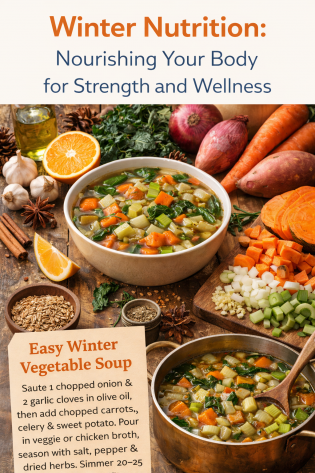
Winter places unique demands on the body, making nutrition especially important for maintaining energy, immunity, and overall well-being. Colder temperatures and shorter days often lead to changes in appetite and activity levels, while seasonal illnesses become more common. Focusing on nutrient-dense foods helps support the immune system and provides sustained warmth and energy. Emphasizing whole foods—such as vegetables, fruits, legumes, whole grains, healthy fats, and quality proteins—can help the body stay resilient throughout the winter months.
Seasonal winter produce offers powerful nutritional benefits. Root vegetables like sweet potatoes, carrots, and beets provide complex carbohydrates and antioxidants that support immune health. Dark leafy greens, citrus fruits, apples, garlic, onions, and winter squash are rich in vitamins A, C, and fiber. Including warming foods such as soups, stews, oats, and herbal teas can support digestion and hydration, which are often overlooked during colder weather. Healthy fats from olive oil, nuts, seeds, and fatty fish help reduce inflammation and support heart health.
Simple, nourishing meals can be both comforting and health-supportive.
Easy Winter Vegetable Soup Recipe:
Sauté one diced onion and two cloves of garlic in olive oil until soft. Add chopped carrots, celery, sweet potato, and any preferred vegetables. Pour in vegetable or chicken broth, season with salt, pepper, and dried herbs, and simmer for 20–25 minutes until tender. Finish with leafy greens like spinach or kale and a squeeze of lemon for brightness. This balanced soup provides fiber, vitamins, and warmth—making it an ideal winter meal for optimal health.